Introduction
Every app team eventually faces the same question: how do we grow installs without simply spending more on ads? Paid user acquisition can bring fast, predictable volume, but it also gets more expensive every year as auction competition increases across both major platforms. Organic growth, when built correctly, compounds instead of resetting to zero the moment a campaign budget runs out.
Mobile app usage continues to climb globally, and with it, the number of apps competing for the same slice of attention. According to Statista's mobile app usage data, users now spend the overwhelming majority of their smartphone time inside apps rather than mobile browsers, which makes organic app store visibility one of the highest-leverage growth channels available to any mobile product.
At ASOWin, organic install growth is never treated as a single tactic. It is a system built from keyword strategy, listing conversion, reputation management, retention signals, and timely updates, all reinforcing each other. This guide walks through the full playbook.
Short Answer: How Do You Increase App Installs Organically?
You increase app installs organically by combining accurate keyword targeting with a store listing that actually converts, a healthy rating and review profile, retention strong enough to signal quality to store algorithms, and periodic updates that keep your listing relevant to seasonal and trending search behavior. None of these levers works in isolation; organic growth compounds when they are managed together as one connected system rather than as separate, occasional projects.
Why Organic Installs Are Worth Prioritizing
Organic installs typically retain better than paid installs because the user found your app through genuine intent rather than an ad interruption. They also cost nothing per install once the underlying optimization work is done, meaning the return on that work compounds over months and years rather than resetting with every new ad campaign.
There is a second, less obvious benefit. A strong organic install base improves the signals that store algorithms use to rank apps in the first place, including retention, review velocity, and update engagement. This creates a flywheel: better organic performance improves ranking, which drives more organic installs, which further improves ranking. Paid acquisition alone does not build this flywheel nearly as effectively.
There is also a resilience argument worth considering. Paid acquisition channels are subject to platform policy changes, rising auction costs, and attribution restrictions that can shift overnight and disrupt a growth plan built entirely around ad spend. Organic visibility, once earned through genuine keyword relevance and product quality, is comparatively stable. It is not immune to competitive pressure, but it does not disappear the moment a budget is paused or an ad network changes its targeting rules.
Organic Growth as a Long-Term Asset
It helps to think of organic ASO work as building an asset rather than running a campaign. A well-optimized listing, a healthy review profile, and strong keyword rankings keep generating installs long after the initial work is done, in the same way that strong web SEO keeps generating traffic long after a page is published. Paid campaigns, by contrast, generate installs only while the spend is active. Both channels matter, but they behave very differently over a multi-year horizon, and organic work tends to have the better long-term return on the hours invested.
Start With Keyword Strategy That Matches Real Search Intent
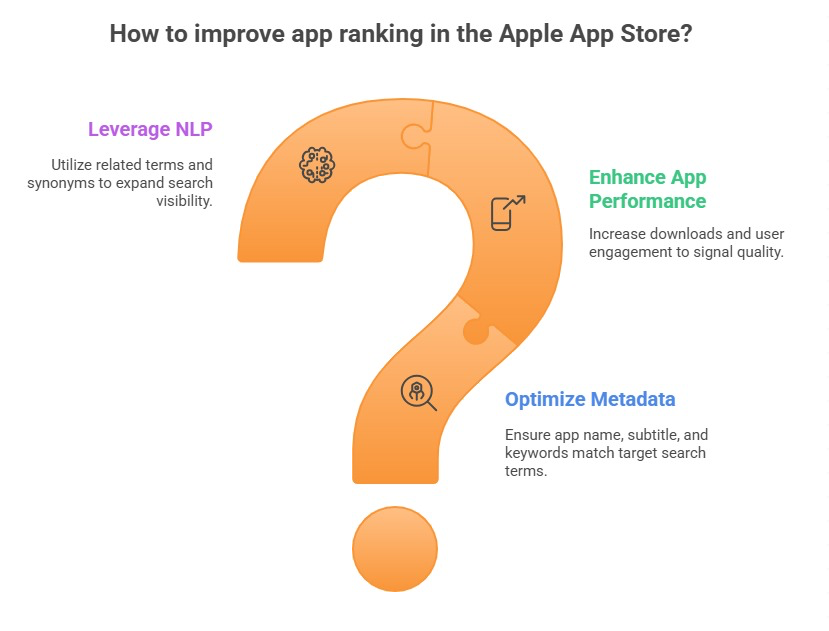
Organic growth starts with being found for the right searches. This means going beyond obvious, broad category terms and building a full keyword map that includes long-tail, specific phrases alongside a smaller number of realistic head terms. Our detailed guide on finding and ranking for long-tail keywords covers exactly how to mine these phrases from reviews, competitor gaps, and search suggestions.
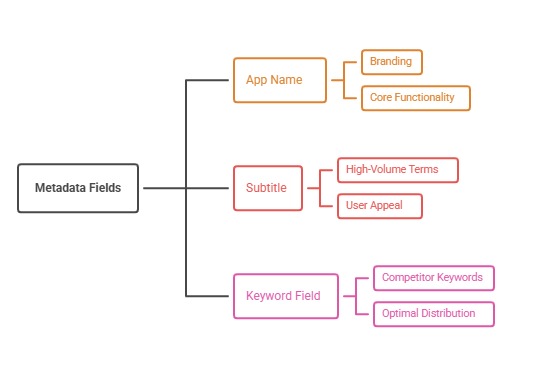
This is also where a dedicated keyword installs strategy earns its keep. Getting keyword placement right across both the App Store's hidden keyword field and the Play Store's long description determines the ceiling for how many organic search impressions your app can realistically capture before any other lever comes into play.
Turn Visibility Into Installs With Listing Conversion
Being found is only half the equation. Once a user lands on your listing, the icon, screenshots, preview video, and description need to do the work of converting that view into an install. Weak creative assets are one of the most common reasons apps with decent keyword visibility still underperform on total installs.
This is a deep enough topic that it deserves its own dedicated treatment, which we cover fully in our guide to App Store conversion rate optimization. The short version: every element of the listing should be tested and iterated, not set once at launch and left untouched for years.
Reviews and Ratings as a Growth Lever
Ratings and reviews influence organic growth in two distinct ways. They factor directly into how both Apple and Google rank apps in search results, and they influence whether a user who finds your listing actually trusts it enough to install. A 3.5-star app with weak recent reviews will convert worse than a 4.6-star app with the same feature set, even with identical keyword rankings.
Responding to Reviews at Scale
Actively responding to reviews, especially negative ones, signals to both users and store algorithms that a team is engaged and improving the product. Prompting satisfied users for reviews at the right moment in the app experience, immediately after a positive interaction rather than randomly, also meaningfully improves overall rating trends over time. Neither tactic requires significant engineering effort, which makes review management one of the highest-return, lowest-cost levers in an organic growth program.
Building Virality and Referral Loops
Some of the most efficient organic growth comes from features that naturally encourage sharing. Referral incentives, shareable content generated inside the app, or collaborative features that require inviting another user all create install demand without any direct marketing spend. Even small virality coefficients compound significantly at scale, since each new user has the potential to bring in additional users through the same loop.
Not every app category lends itself equally to virality. Social and collaborative apps benefit the most, while utility apps may need to rely more heavily on other organic levers. Understanding where your app's category sits on this spectrum, something we help clients assess as part of app market research, shapes how much weight virality should carry in the overall growth plan.
Even modest virality mechanics deserve deliberate design rather than being left as an afterthought. A simple "invite a friend" prompt placed at a natural high-value moment in the user journey, for example right after a user completes a task worth sharing, will consistently outperform the same prompt buried in a settings menu. Testing where and when these prompts appear is its own small optimization discipline, and it often gets overlooked entirely by teams focused purely on keyword and metadata work.
Cross-Promotion and Multi-App Ecosystems
Companies with more than one app have an organic growth channel that single-app teams do not: cross-promotion. Promoting a second app to an existing user base costs nothing in media spend and typically produces higher-quality installs, since those users already trust the brand from another product. Even a modest cross-promotion banner or in-app prompt can meaningfully move install numbers for a newer or smaller app in the same portfolio.
Beyond direct cross-promotion, thoughtful category and keyword alignment between apps in the same portfolio can also create halo effects, where strong performance in one app's category subtly reinforces trust and discoverability for a companion app.
Single-app teams should not dismiss this lever entirely. Partnerships with complementary, non-competing apps that share a similar audience can replicate much of the same effect. A budgeting app and a receipt-scanning app, for instance, serve overlapping audiences without competing directly, making a cross-promotion partnership a realistic option even for teams without a multi-app portfolio of their own.
Seasonal Updates and Timely Relevance
Search behavior is not static throughout the year. Fitness apps see spikes around January, tax and finance apps see spikes in filing season, and shopping apps see predictable surges around major sale events. Aligning app updates, screenshots, and even keyword emphasis with these seasonal windows captures organic demand that a static, never-updated listing simply misses.
This same principle applies to platform-level trends. Google Play's ranking systems, discussed in depth in our Google Play ranking strategies guide, reward apps that update consistently and stay relevant to current search behavior, rather than apps that ship once and go quiet for a year.
Retention as an Organic Ranking Signal
Both major app stores increasingly weigh post-install engagement and retention as ranking signals, not just install volume. An app that drives installs but sees users churn within days sends a weaker quality signal than one where users stick around and keep returning. This means organic growth strategy cannot stop at the moment of install; onboarding quality, early engagement prompts, and first-session experience all indirectly feed back into future organic visibility.
Teams sometimes treat ASO and product engineering as separate departments with separate goals. In practice, retention improvements from the product team directly support the organic growth numbers the marketing team is chasing, which is why the best organic growth programs involve both functions working from shared data.
A practical starting point is looking at day-one and day-seven retention alongside your keyword ranking dashboard, rather than treating them as reports for two different teams. When retention dips at the same time rankings soften, that correlation is worth investigating immediately, since it often points to a real product issue rather than a purely marketing one, and no amount of metadata rewriting will fix a churn problem sitting underneath the surface.
Measuring What's Actually Working
Because organic growth involves multiple levers moving simultaneously, isolating what is actually driving install growth requires disciplined measurement. Track keyword ranking movement, listing conversion rate, review velocity and sentiment, and retention curves separately, rather than looking only at total install numbers. A spike in installs without a clear driver is much harder to replicate than a spike traced to a specific keyword change or a new screenshot set.
At ASOWin, we build reporting around each individual lever so clients can see exactly which changes are producing results, rather than treating organic growth as an unexplainable black box.
Final Answer: Building a Sustainable Organic Growth Engine
Increasing app installs organically is not about finding one clever trick. It is about running keyword strategy, listing conversion, reputation management, virality, cross-promotion, and retention as one connected system, measured consistently over time. Apps that treat these levers as isolated, occasional projects tend to plateau; apps that run them as an ongoing program tend to keep compounding.
For the complete step-by-step framework, see our App Store Optimization checklist for 2026, and explore more growth playbooks on our blog. If you would rather have a team run this entire system for you, ASOWin builds and manages organic growth programs designed around your app's specific category, audience, and current stage of growth.