Quick answer: Effective ASO keyword research starts with the problem users are trying to solve, expands that problem into feature, outcome, audience, and occasion themes, and then prioritizes terms by relevance, intent, opportunity, and business value. Search volume is a clue—not the decision. The best keyword set describes the app honestly and attracts users who are likely to install and stay.
What this guide will help you do
This guide focuses on ASO keyword research with a practical, evidence-led approach. It covers app store keywords, app keyword research, ASO keyword strategy without repeating phrases for artificial density. Use the framework to make a clear decision, document the result, and improve the next release.
Start with a semantic market map
List the app's core job, supporting features, desired outcomes, target users, use occasions, and common alternatives. A budgeting app, for example, may belong to themes such as expense tracking, bill planning, shared finances, saving goals, and financial routines. This map produces broader coverage than brainstorming synonyms for one head term.
Mine language from onboarding interviews, support tickets, reviews, competitor listings, paid-search queries, and store suggestions. Keep the user's words, but label the intent behind them. Terms that sound similar can imply different products, stages of awareness, or expectations.
Score opportunity without false precision
Use a simple scorecard: product relevance, intent strength, relative popularity, ranking difficulty, current authority, conversion fit, and strategic value. A three-point scale is often enough. The goal is to make tradeoffs explicit, not manufacture a perfect number from uncertain inputs.
Separate discovery terms from decision terms. Broad discovery phrases can build reach; specific feature and outcome phrases can convert better. Maintain a balanced portfolio of core, supporting, and experimental themes so one algorithm shift or competitor does not erase visibility.
Turn research into platform-specific metadata
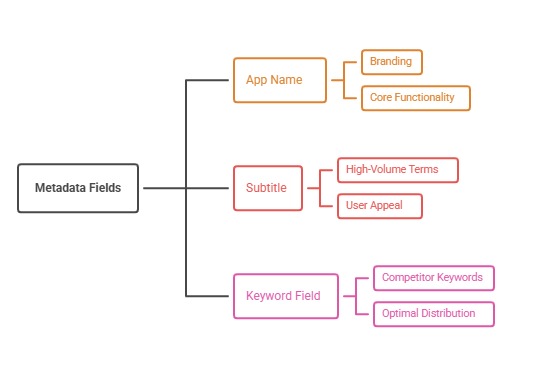
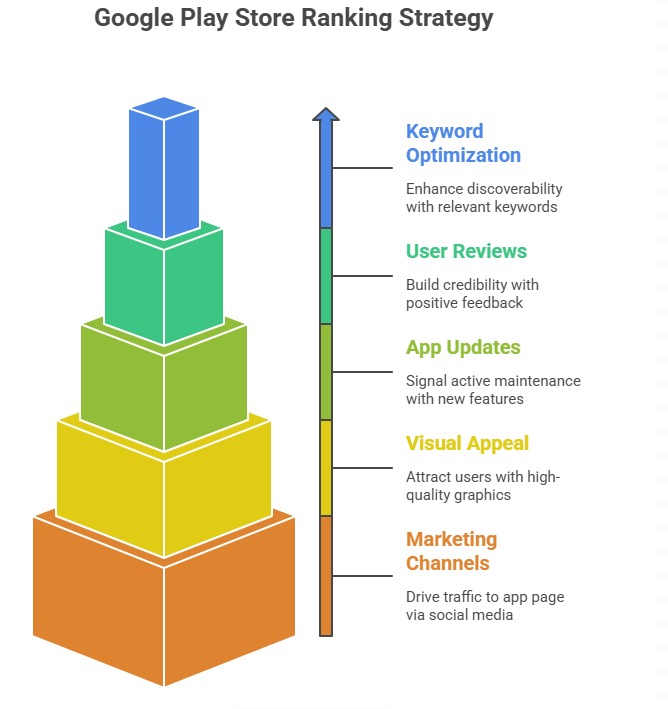
On iOS, assign the clearest and most valuable concepts to the name and subtitle, then use the keyword field to extend coverage without wasting space on unnecessary repetition. On Google Play, express priority themes naturally across the title and descriptions while preserving readable, persuasive copy.
A keyword is not finished when it is placed. Connect it to a matching first screenshot, proof point, and product experience. If the page promises an invoice scanner, users should immediately see that function and reach it after install.
Refresh the portfolio with evidence
Track which themes gain visibility, which product-page visitors install, and which cohorts retain or monetize. Promote terms that create qualified growth, revise terms with weak message match, and retire terms whose opportunity no longer justifies scarce metadata space.
Revisit research after major releases, shifts in customer language, seasonality, new competitors, and expansion into new markets. Avoid arbitrary weekly rewrites; stable measurement windows make the next decision more trustworthy.
Action plan
- Interview the product team before opening a keyword tool
- Group terms by job, feature, audience, and occasion
- Score relevance and intent before popularity
- Assign every target theme a matching creative message
- Track cohorts, not rankings alone
- Keep a change log for every metadata release
Metrics to monitor
- Relevant keyword coverage
- Share of priority terms improving
- Conversion rate by search theme where available
- Retention and value of organic cohorts
Record the baseline, release date, audience, markets, and external changes before interpreting movement. Rankings and conversion are useful signals, but a decision is stronger when activation, retention, and business value confirm that the page attracted the right users.
Continue the topic cluster
Use these supporting resources to move from this strategy into the next implementation step:
- Apple App Store Keyword Field: How to Use Every Character Strategically
- Google Play Keyword Optimization Without Keyword Stuffing
- Long-Tail App Store Keywords: Win High-Intent Searches
- Competitor ASO Analysis: Find Gaps Without Copying Rivals
- App store optimization services
- App store optimization services
Frequently asked questions
How many ASO keywords should I target?
Target only as many themes as the listing and product can support clearly. iOS space is especially constrained. A focused portfolio of closely related terms usually produces a stronger relevance and conversion story than a scattered list.
Can I use competitor brand names?
Policies and trademark risk matter, and the tactic often brings weak intent. Build demand around the problem and differentiators instead. Get legal guidance before using another brand in metadata or promotional claims.
How often should keyword research be updated?
Review it when meaningful evidence or market change appears—such as a major release, new territory, seasonal shift, or sustained performance plateau. Monitor continuously, but avoid changing metadata before you can interpret the prior test.
Primary sources
Platform capabilities and limits can change. Verify current requirements in these official resources: