Introduction
App Store Optimization used to be a fairly mechanical exercise. Find high-volume keywords, place them in the title and metadata fields, ship new screenshots, and watch rankings move. That model is breaking down fast, because the systems doing the ranking are no longer simple keyword matchers.
Both the Apple App Store and Google Play now use machine learning and natural language processing to interpret search queries, evaluate metadata, and read signals from user reviews. That means the store itself is getting better at understanding what an app actually does, not just what words appear in its listing.
At ASOWin, we have watched this shift closely across the portfolios we manage, and it has real implications for how teams should approach App Store Optimization in 2026. This article breaks down what is actually changing, why exact-match keyword stuffing is losing effectiveness, and how AI tools can help ASO teams keep up without losing the strategic judgment that still drives results.
Short Answer: How Is AI Changing ASO?
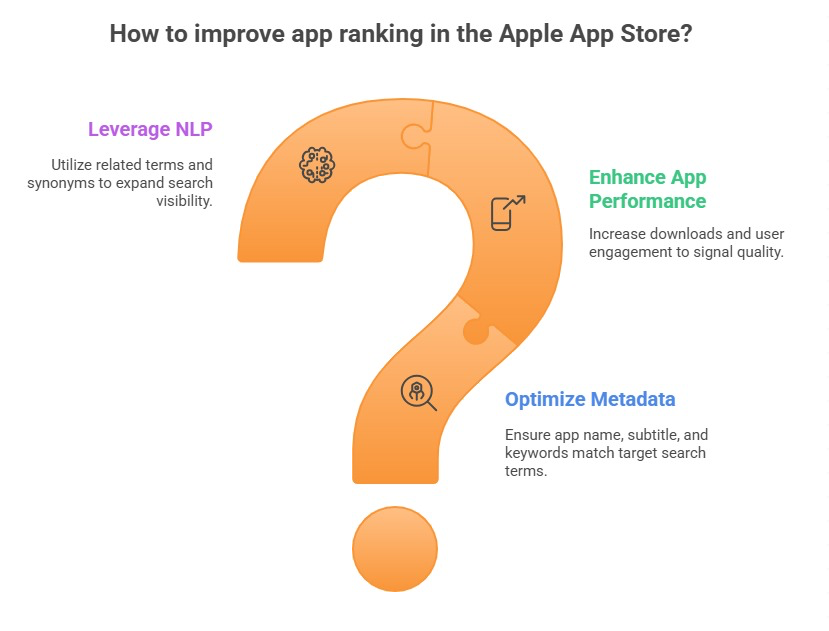
AI is shifting app store search from literal keyword matching toward semantic understanding of intent, context, and quality signals. Search algorithms now weigh how closely an app's metadata, reviews, and behavior data match what a user actually means, not just the exact words they typed. For ASO teams, this means strategy has to move from keyword density toward topical relevance, review quality, and structured, AI-assisted analysis of ranking and competitor data.
From Keyword Matching to Semantic Search
For years, ASO revolved around a fairly simple mental model: identify keywords with strong search volume and low competition, then insert them into the title, subtitle, and keyword fields as densely as reasonably possible. This worked because the underlying search systems were mostly literal, matching query text to metadata text.
Search engines outside the app store world moved past this years ago. Google's own SEO guidance has long emphasized writing for users and topical relevance over exact-match keyword insertion, and app stores are following the same trajectory. App store search now increasingly considers:
- The overall topic and category an app belongs to, inferred from its full metadata, not just isolated keyword fields
- Synonyms and related concepts, so an app optimized for "budgeting app" can still surface for "expense tracker" queries
- Review content and sentiment as a signal of what the app is actually used for and how well it delivers
- User behavior after install, including retention and engagement, as a proxy for listing accuracy and app quality
We cover this shift in more depth in our breakdown of semantic intent and ASO in 2026, and in our companion piece on going beyond keywords for semantic ASO. The short version: teams that keep optimizing purely for exact-match keyword density are optimizing for a search model that is quietly being phased out.
Why Exact-Match Keyword Stuffing Backfires Now
Historically, some ASO practitioners repeated target keywords across the title, subtitle, description, and even screenshot text as many times as possible. On the surface, this looked harmless. In practice, it increasingly works against apps for two reasons.
First, both app stores and general search engines have spam policies that specifically target repetitive, low-value keyword insertion. Google's spam policies explicitly call out keyword stuffing as a practice that can suppress visibility rather than help it, and app store review systems have moved in a similar direction with metadata quality checks.
Second, semantic ranking systems do not need the exact phrase repeated to understand relevance. A listing that naturally covers related concepts, use cases, and benefits communicates relevance more effectively to an AI-driven search model than a listing that repeats one phrase five times. Natural, benefit-led writing now tends to outperform mechanical repetition, both for conversion and for ranking.
What This Means for Metadata Writing
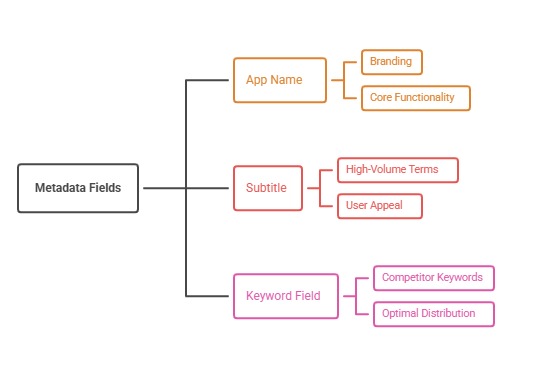
At ASOWin, our metadata process has shifted accordingly. Instead of asking "how many times can we fit this keyword in," we ask "what related concepts, use cases, and phrasing would a real user recognize as describing this app." That produces metadata that reads naturally, satisfies both semantic and literal matching, and converts better because it speaks to actual user intent rather than search engine mechanics.
In practice, this means our keyword research process now maps out topic clusters rather than isolated phrases. For a budgeting app, that might mean grouping "expense tracker," "spending categories," "bill reminders," and "savings goals" as a single semantic cluster, then making sure the metadata naturally covers the cluster's core concepts rather than repeating one exact phrase. A listing that touches on all the related concepts a user might have in mind tends to match a wider range of semantically similar queries than one optimized for a single exact phrase, even one with high search volume.
This also changes how we think about the long description field on Google Play, which has historically been treated as a place to cram keywords since it does not display prominently to users. Under a semantic ranking model, unnatural keyword density in that field is more likely to be discounted or flagged than rewarded, while a well-written, benefit-led description that naturally covers relevant concepts tends to perform better for both ranking and the smaller number of users who do read it in full.
How NLP Reads Reviews and Ratings
One of the more significant shifts is how much weight review content now carries. Natural language processing lets store algorithms extract structured signals from unstructured review text: which features users mention, what complaints recur, what sentiment attaches to specific aspects of the app, and how sentiment trends over time.
This matters for ASO strategy in a few concrete ways:
- Reviews that repeatedly mention specific features or use cases reinforce keyword relevance for those terms, even without you writing them into metadata
- Persistent negative sentiment around a specific issue, such as crashes or confusing onboarding, can suppress ranking and conversion regardless of how strong the metadata is
- Developer responses that address complaints and demonstrate active maintenance appear to support trust signals used in ranking and conversion
- Review velocity and recency matter, since a wall of old reviews carries less weight than a healthy, ongoing stream of recent feedback
This is exactly the kind of pattern recognition where AI tooling earns its keep. Manually reading thousands of reviews to spot sentiment trends is impractical at scale. AI-assisted sentiment analysis tools can process review volume that would take a human team weeks to review manually, surfacing the handful of recurring themes that actually deserve product or messaging attention.
We also see teams underestimate how much review language shapes the keyword landscape over time. If hundreds of users describe your app using a term you never explicitly optimized for, that term is effectively becoming part of your app's semantic footprint whether you planned for it or not. Monitoring this pattern regularly, rather than relying only on your own keyword list, often surfaces opportunities that traditional keyword research tools miss entirely, since those tools are built around search volume data rather than the actual language your existing users use to describe your product.
Where AI Tools Genuinely Help ASO Teams
AI is not a replacement for ASO strategy, but it is a genuine force multiplier for the parts of the job that are data-heavy and repetitive. The categories where we see the clearest value at ASOWin include:
- Keyword clustering: grouping large keyword lists into semantic clusters by intent and topic, rather than treating each keyword as an isolated data point
- Review sentiment analysis: summarizing thousands of reviews into ranked themes, so product and ASO teams know what to prioritize
- Competitor benchmarking: tracking competitor metadata, screenshot, and ranking changes automatically instead of manual spot checks
- Metadata drafting: generating first-pass title, subtitle, and description variations for human review and refinement
- Reporting automation: compiling rank tracking, conversion, and review data into digestible weekly or monthly summaries
We go deeper on the reporting side specifically in our guide to automating ASO reporting with AI, which covers how teams can cut hours of manual dashboard work without losing reporting accuracy. And if you want practical, ready-to-use prompt examples for these workflows, our post on ChatGPT prompts for ASO managers walks through specific use cases in detail.
The Limits of AI in ASO Strategy
It is worth being direct about what AI tools cannot reliably do yet. Generative tools can draft plausible-sounding metadata, but they do not inherently know your brand voice, your competitive positioning, or which claims are actually true and compliant for your app category. Sentiment analysis tools can flag that reviews mention "confusing checkout," but deciding whether that is a UX problem, a messaging problem, or a one-off complaint still requires human judgment.
AI models can also produce confident-sounding but inaccurate keyword volume estimates or competitor claims if the underlying data source is not reliable. Every AI-generated recommendation we use internally at ASOWin gets validated against real ranking data, real store listing screenshots, and real review content before it goes into a client strategy. Treating AI output as a first draft rather than a final answer is the difference between using these tools well and using them carelessly.
How This Plays Out Differently by App Category
The practical impact of AI-driven search also varies by category. Mobile games, for example, tend to see heavier reliance on visual and video signals alongside metadata, since screenshots and preview videos carry outsized weight in conversion; our gaming ASO playbook covers this in detail. Utility and finance apps, by contrast, tend to see review sentiment and trust signals weigh more heavily, since users are more cautious before installing.
Apps expanding internationally add another layer entirely, since semantic search models behave differently across languages and markets. Our app localization guide for global markets covers how to adapt keyword and metadata strategy market by market, rather than assuming one AI-optimized listing translates cleanly everywhere.
Building an AI-Aware ASO Workflow
A practical AI-aware ASO workflow tends to follow a consistent pattern regardless of app category:
- Use AI tools to process large volumes of keyword, review, and competitor data quickly
- Cluster and prioritize findings by actual user intent and business impact, not raw volume
- Draft metadata and creative concepts with AI assistance, then refine them with human strategic judgment
- Validate every AI-generated recommendation against real store data before publishing
- Automate recurring reporting so the team spends time on decisions, not data compilation
This is essentially the model ASOWin has built into its AI-powered ASO service, which combines automated data processing with hands-on strategic oversight, rather than fully automating decisions that still need human context.
One practical detail worth flagging: the value of this workflow compounds most for teams managing several apps or several markets at once. A single app in a single country can often get by with lighter tooling and more manual review. Once you are tracking dozens of keyword clusters across multiple languages, competitor sets that shift weekly, and review volume in the thousands, the automation layer stops being a nice-to-have and starts being the only realistic way to keep the analysis current enough to act on.
Final Answer: Where AI Is Taking ASO Next
AI is not making App Store Optimization obsolete. It is making the mechanical, keyword-stuffing version of ASO obsolete, while raising the value of teams that understand semantic search, review sentiment, and how to use automation without losing strategic judgment.
Apps that keep treating ASO as a keyword insertion exercise will see diminishing returns as store algorithms get better at understanding intent. Apps that invest in semantic relevance, review quality, and AI-assisted analysis will be better positioned as this shift continues.
At ASOWin, we help teams make that transition without guesswork, combining AI-assisted tooling with hands-on ASO expertise across keyword strategy, metadata, creative testing, and reporting. Explore more of our thinking on the ASOWin blog, or reach out if you want a practical assessment of where your app stands today.