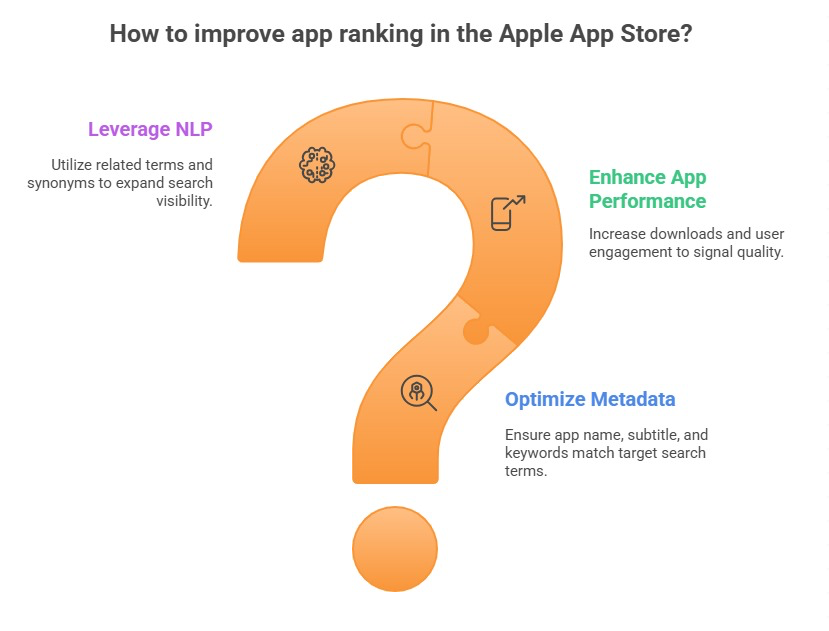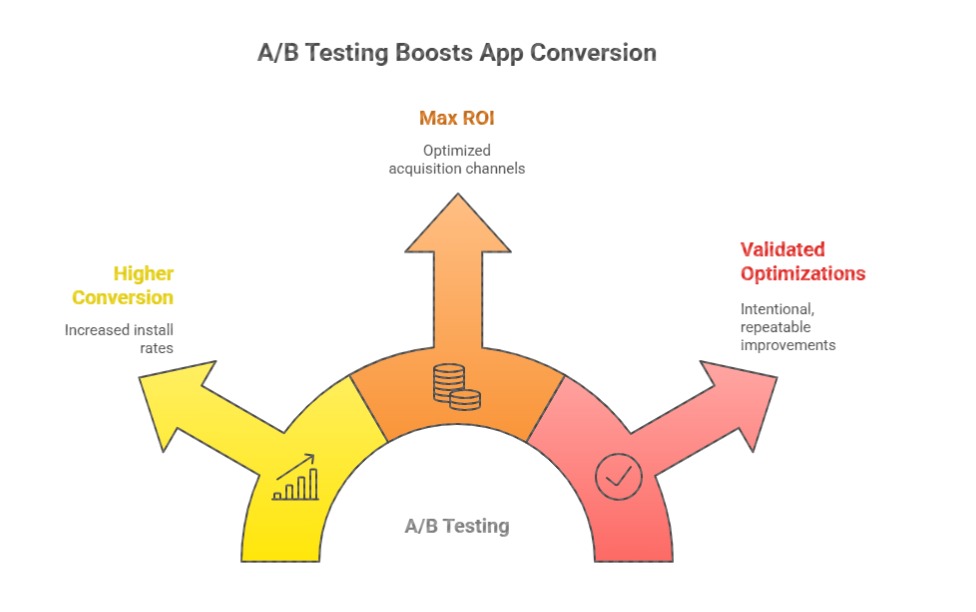
Quick answer: ASO and paid user acquisition work best as one system. Paid campaigns create controlled traffic and fast creative evidence; ASO improves the store conversion layer and captures relevant organic demand. Align each campaign promise with a tailored product page, share learnings across teams, and evaluate cost, conversion, retention, and organic incrementality together.
What this guide will help you do
This guide focuses on ASO and paid user acquisition with a practical, evidence-led approach. It covers paid UA and ASO, app growth strategy, Apple Ads ASO without repeating phrases for artificial density. Use the framework to make a clear decision, document the result, and improve the next release.
Map intent from ad to onboarding
Group campaigns by the job and audience they promise, then mirror that promise in the first store assets and the first product session. Message discontinuity wastes paid clicks and can reduce retention.
Apple custom product pages and Google Play custom store listings support tailored experiences for eligible campaign and audience configurations. Use them where message distance from the default page is material.
Create a shared creative learning system
Paid channels can test hooks quickly; store experiments can validate decision-stage assets in native context. Tag concepts consistently—outcome, feature, proof, audience, format—so results transfer as principles rather than copied banners.
A paid winner may fail on the store because context differs. Re-test important ideas in the environment where they will be applied.
Judge the complete economics
Measure click-to-store continuity, listing conversion, cost per install, activation, retention, purchase or subscription, and lifetime value by campaign and product page. Include creative production and localization cost.
Organic movement during paid bursts may reflect brand search, ranking dynamics, seasonality, or unrelated releases. Use geographic or time-based experiments when feasible and describe any halo as an estimate, not certainty.
Action plan
- Define campaign intent
- Match ad and store-page promise
- Share a creative taxonomy
- Re-test ideas in native context
- Measure cohort economics
- Estimate organic lift cautiously
Metrics to monitor
- Ad-to-store and store-to-install conversion
- CPI and incremental installs
- Activation, retention, and LTV
- Organic movement versus control
Record the baseline, release date, audience, markets, and external changes before interpreting movement. Rankings and conversion are useful signals, but a decision is stronger when activation, retention, and business value confirm that the page attracted the right users.
Continue the topic cluster
Use these supporting resources to move from this strategy into the next implementation step:
- Custom Product Pages on iOS: Match Every Campaign to Its Intent
- How to Increase Organic App Installs Without Buying Fake Traffic
- App Store Conversion Rate Optimization: Turn More Visitors Into Installs
- ASO KPIs: The Metrics That Connect Visibility to Revenue
- Paid user acquisition services
- App store optimization services
Frequently asked questions
Does ASO lower paid acquisition cost?
A more relevant, persuasive product page can improve store conversion and therefore acquisition efficiency, but impact varies by campaign, market, and baseline.
Should paid and organic use identical creative?
They should share positioning and evidence, but adapt format and emphasis to user intent and placement.
Primary sources
Platform capabilities and limits can change. Verify current requirements in these official resources: