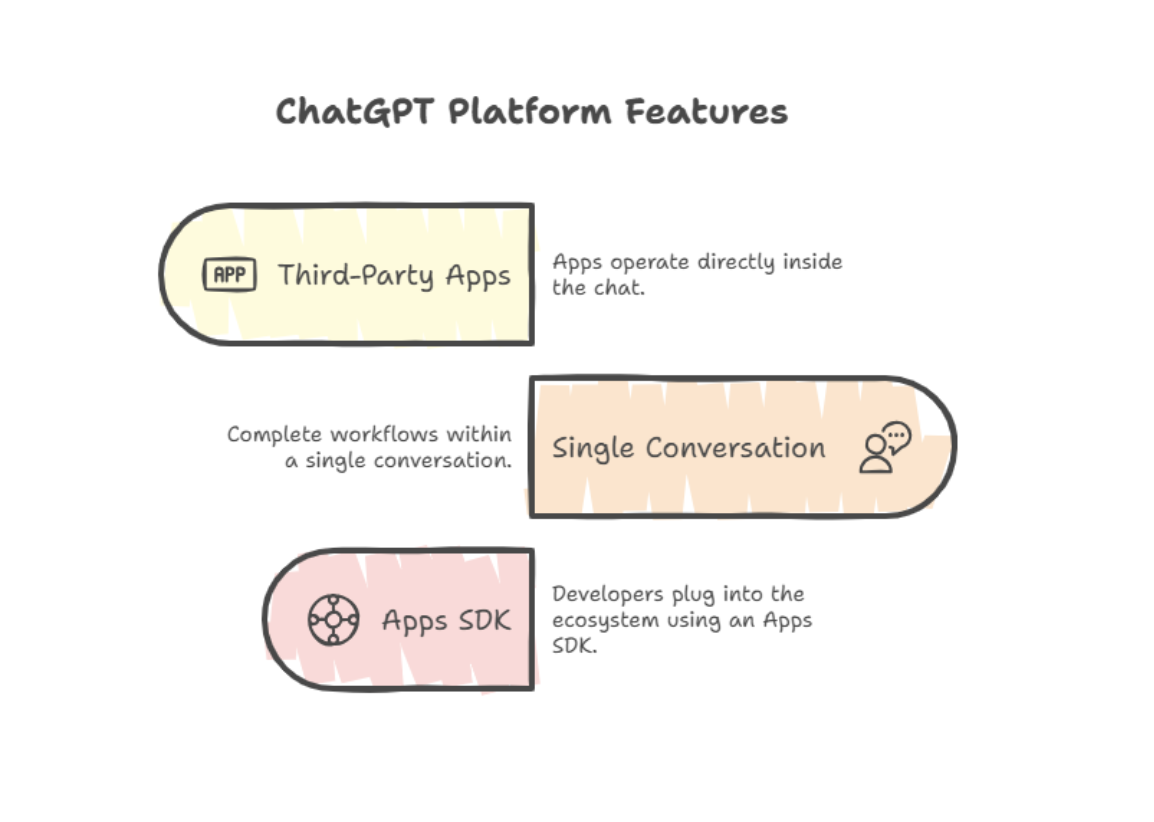
Users increasingly ask AI assistants and conversational search for app recommendations. While the stores remain the main install path, apps benefit from clear positioning, consistent descriptions across web and stores, strong reviews, and structured web content that AI systems can understand and cite.
How discovery is changing
Assistants and answer engines may summarize options and name apps in response to task-based questions. Which apps they mention depends on the sources they draw on, which can include websites, reviews, and store pages.
Behavior varies across products and changes quickly, so treat any tactic as an experiment.
Be clear and consistent
Describe what the app does, who it is for, and how it differs, in plain language, and keep that description consistent across the website, store listings, and press. Ambiguity makes it harder for systems and people to represent you accurately.
Use specific use-case language rather than vague claims.
Build credible signals
Ratings, reviews, press coverage, and authoritative mentions contribute to how an app is perceived. Publish helpful content on your website that answers real questions in your category, with accurate information.
Avoid manipulative tactics that try to game systems.
Make information accessible
Use clear page structure, descriptive headings, and structured data where appropriate on web pages. Keep store listings accurate and up to date.
Track referral sources and ask new users how they found you to learn the effect.
Common mistakes with AI search app discovery
Chasing hacks to appear in assistant answers is a poor use of time, since behavior changes constantly. Another mistake is inconsistent descriptions across the website, store, and press. Neglecting reviews and credible mentions weakens signals.
Publishing thin content on the web to catch queries can backfire.
AI search app discovery: a worked example
A team rewrites its homepage and store description to say the same clear thing about who the app helps and how. It publishes a genuinely useful guide on a task its users face, links to the store, and asks new users how they found the app.
Over time it sees assistant mentions appear in survey answers and referrals.
How to do it, step by step
- Write one clear descriptionUse the same wording across web, store, and press.
- Publish helpful contentAnswer the real questions in your category.
- Build credible mentionsEarn reviews and coverage.
- Add structureUse clear headings and structured data.
- Ask users how they found youAdd a short survey.
Before and after examples
Illustrative examples written for a generic app in this category, not client results. Swap in your own product, audience, and data.
Three different descriptions
One clear sentence reused everywhere
Why it works: Consistency helps systems and people.
Thin pages for queries
A guide that helps solve a task
Why it works: Quality matters.
Guess
A how did you hear about us question
Why it works: It shows discovery sources.
Action plan
- Define clear use-case positioning
- Keep descriptions consistent everywhere
- Publish helpful, accurate web content
- Build ratings and credible mentions
- Use clear structure and structured data
- Ask users how they found you
Metrics to monitor
- Branded and use-case search trends
- Referral sources including AI assistants
- Self-reported discovery sources
- Rating and review volume
Record the baseline, release date, audience, markets, and external changes before interpreting movement. Rankings and conversion are useful signals, but a decision is stronger when activation, retention, and business value confirm that the page attracted the right users.
Frequently asked questions
Can I optimize for AI assistants directly?
Focus on clarity, credibility, and accessibility rather than tricks; behavior changes.
Does this replace ASO?
No; the stores remain central, and this adds another channel.
How do I measure it?
Use referral data and surveys, recognizing limitations.
Keep reading
More in Growth Strategy
Browse all 5 Growth Strategy guides